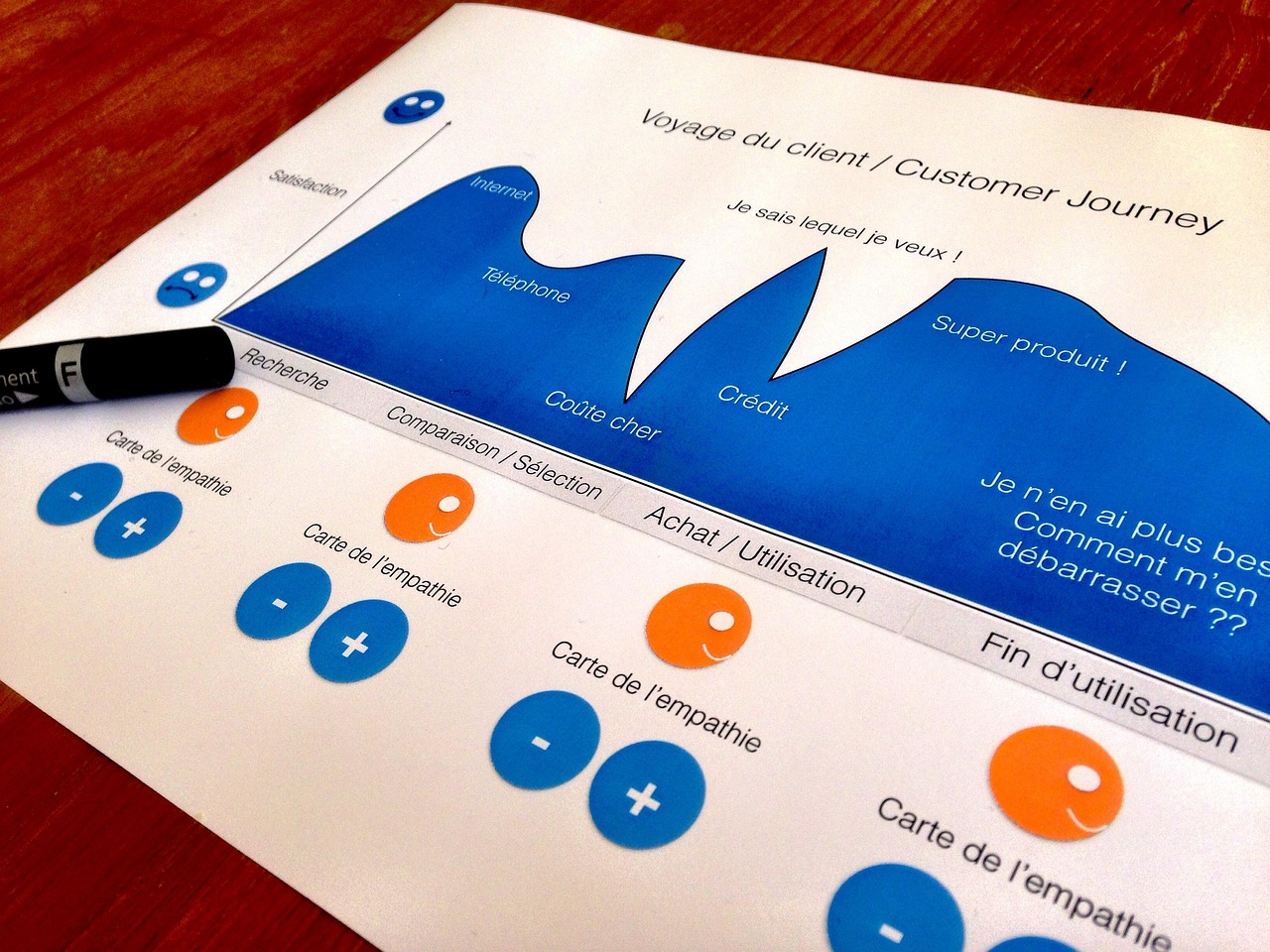

Customer Journey Mapping through Data Analytics in Finance and Business
The process of customer journey mapping serves as an essential tool for organizations aiming to improve their customer engagement strategies. By utilizing data analytics, companies can gain insights on various customer touchpoints, thereby enabling them to identify opportunities for enhancing the customer experience. This process involves analyzing both quantitative and qualitative data, which may include customer surveys, web analytics, and transactional data. Understanding the full spectrum of customer interactions allows businesses to pinpoint problem areas and feelings during their journeys. Furthermore, journey mapping helps organizations tailor their marketing efforts, ensuring they are addressing customer needs effectively. Customer journey maps also provide the framework for aligning digital and physical touchpoints, which is crucial in today’s multi-channel world. Using dashboards and visual representations of data, stakeholders can easily recognize patterns and trends that may affect customer loyalty and retention rates. Consequently, successful customer journey mapping empowers companies to create targeted strategies that resonate with their audience, fostering improved relationships and satisfaction. It is necessary for businesses, especially in finance, to employ strategic data-driven insights to stay competitive in the evolving market landscape.
Additionally, analytics tools have the potential to transform how organizations approach their customer journey mappings. With advancements in technology, machine learning algorithms can perform detailed analyses on vast amounts of customer data, identifying trends that were previously undetectable. This can include discerning which features customers use the most, as well as their preferences when interacting with various channels. Such insights allow businesses to customize their offerings and interactions based on concrete evidence rather than assumptions. The value of such data becomes especially clear in financial services, where customer behavior can directly influence profitability. Companies can leverage this information to optimize their service delivery, operational efficiency, and risk management strategies. By creating more personalized customer experiences through data analytics, organizations can enhance customer trust and loyalty. Furthermore, customer journey mapping extends beyond acquisition; it is invaluable in retaining existing clients. Continuous feedback loops enable businesses to make iterative improvements based on real-time data, ensuring they are consistently meeting customer expectations. Organizations that master the art of data-driven customer journey mapping can ultimately create value for their customers while solidifying their competitive advantage.
Key Metrics for Analyzing Customer Journeys
In undertaking effective customer journey mapping, businesses must consider a variety of key metrics that can accurately reflect the customer experience. These metrics guide organizations in measuring specific touchpoints and overall journey effectiveness. Commonly analyzed metrics include customer satisfaction scores, Net Promoter Scores (NPS), Customer Lifetime Value (CLV), and churn rates. Understanding these metrics leads organizations to identify which aspects of the journey are successful or may require further enhancements. For instance, high NPS scores indicate that customers feel positively about their experience, while low scores can highlight areas for immediate improvement. Additionally, tracking CLV enables businesses to understand the long-term value of each customer relationship. In finance, recognizing which customer segments yield the highest value allows for better-targeted marketing and retention strategies. Churn rates provide insight into customer retention; identifying touchpoints where customers disengage can help rectify detrimental experiences before they lead to lost revenue. Furthermore, embracing both qualitative feedback—the voice of the customer—through surveys or interviews, and quantitative data will furnish a comprehensive view of customer sentiment. Combining these metrics with appropriate analytics tools is essential for a successful customer journey mapping process.
Another crucial dimension of customer journey mapping is journey visualization, which plays an instrumental role in uncovering insights. By presenting data in visual formats, organizations can easily comprehend complex information and identify gaps in their customer experiences. Various tools can assist in creating these visualizations, with flowcharts, diagrams, and journey mapping software being widely utilized. Effective visualizations allow teams to collaboratively discuss the customer journey and uncover pain points that may not be apparent through raw data alone. Engaging stakeholders in this visualization process promotes a shared understanding of customer expectations and outcomes, driving alignment across departments. In finance, where interactions often span multiple platforms, clear visualizations help teams conceptualize customer pathways and optimize each touchpoint for enhanced user experience. Furthermore, being able to see the customer journey in a visual format aids in prioritizing areas that warrant immediate attention. Integrated analytics dashboards can combine relevant metrics with visualizations, fostering real-time decision-making and ongoing improvements. As businesses continually refine their journey maps, they can enhance satisfaction and foster deeper relationships with clients and customers.
Challenges in Customer Journey Mapping
Despite its advantages, customer journey mapping is not without challenges that must be navigated effectively. One significant hurdle is data silos within organizations, where different departments may hold valuable insights that are not shared across the business. This fragmentation can hinder a holistic view of the customer experience, making it difficult to create ‘one view of the customer.’ To combat this issue, organizations must actively foster a culture of collaboration and data sharing. Additionally, as customer behaviors and market dynamics evolve rapidly, keeping journey maps current can present another challenge. Regularly updating these maps using real-time data is essential for maintaining their relevance. In finance, regulatory changes or economic fluctuations may necessitate reevaluation of customer journeys to ensure compliance and satisfaction. Organizations can implement regular feedback mechanisms and data analyses to address these updates. Ensuring all stakeholders are aligned and informed about changes in journey mapping fosters accountability and a continuous improvement mindset. The integration of agile methodologies can also lend flexibility to adapt and innovate more seamlessly across customer touchpoints.
The impact of customer journey mapping extends beyond improved customer experiences; it also benefits the internal workings of an organization significantly. When teams collaborate to create journey maps, they improve cross-departmental communication, thus breaking down barriers that may impede growth and innovation. As different teams bring their perspectives to the table, they create a more nuanced understanding of the overall customer experience. This collaborative approach inspires creativity as new ideas emerge, resulting in strategies that are both effective and comprehensive. Additionally, the insights derived from journey mapping may empower employees to become more engaged in their roles. Understanding customer frustrations and motivations can spur a deeper commitment to improving interactions. Employees who see the direct impact of their work on customer satisfaction may be more energized and driven. Moreover, these insights can lead to better training programs tailored to address specific pain points. In finance, where customer trust and transparency are paramount, equipping employees with the necessary skills can help to foster a culture of service excellence. Overall, a well-implemented journey mapping strategy encourages continual evolution, fostering a customer-centric organization.
The Future of Customer Journey Mapping in Business Analytics
As the landscape of business analytics continues to evolve, so too does the approach to customer journey mapping. Organizations are increasingly leveraging advanced technologies such as artificial intelligence, predictive analytics, and big data to elevate their mapping processes. AI-powered tools can analyze customer data to anticipate future behaviors, allowing businesses to tailor their strategies proactively. Predictive modeling offers insights into potential outcomes, enabling organizations to simulate different scenarios in real-time. Moreover, the growth of omnichannel platforms is forcing companies to consider how various channels and touchpoints interact with each other. Integrating these insights into journey maps is paramount for developing cohesive customer experiences. Future mapping will likely encompass a more extensive array of data sources, such as social media interactions, IoT data, and mobile engagement analytics. Using machine learning, journey mapping tools can provide businesses with dynamic maps that evolve in response to changing customer preferences. This ongoing adaptation gives companies a competitive advantage by ensuring they remain relevant in a fast-paced market. By prioritizing innovation and analytical capabilities, organizations can continue refining their customer journey mapping and achieving sustainable growth.
In conclusion, effective customer journey mapping through data analytics plays a vital role in creating positive customer experiences and driving business success. As organizations continue to evolve and leverage analytical insights, they will be better positioned to meet the changing needs of their customers. By investing in ongoing journey mapping practices, companies can enhance customer satisfaction, boost loyalty, and ultimately achieve sustainable growth. With competition growing fiercer in the business landscape, organizations that manage to map out their customer journeys successfully will stand out as leaders in their industry. The future of customer journey mapping relies on the ability to harness data effectively, ensuring that organizations can respond swiftly to changing customer demands. Moreover, companies must remain adaptable and open to continuously iterate upon their mapping processes. As technological advances unlock new dimensions of customer understanding, the emphasis on data-supported customer journey mapping will only intensify. Embracing innovation in this space will create a more holistic view of the customer experience, leading to better outcomes for both customers and organizations. Overall, organizations prepared to embrace this journey mapping approach will equip themselves to navigate the complexities of modern consumer behavior effectively.