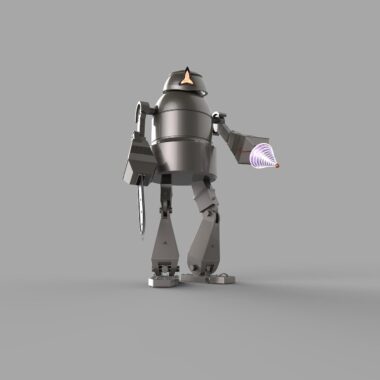

Robotics and AI: Redefining Business Innovation
In today’s rapidly evolving technological landscape, the integration of robotics and artificial intelligence (AI) is transforming traditional business models into innovative frameworks. Businesses are increasingly adopting these technologies to enhance efficiency, reduce costs, and improve service delivery. Robotics enables automation of repetitive tasks, allowing human resources to focus on higher-level strategic activities. The calibration of AI aligns perfectly with this shift, as it provides data-driven insights that guide decision making. For instance, AI algorithms can analyze customer behaviors and preferences, leading companies to tailor their offerings significantly. Furthermore, robotics often works hand-in-hand with AI to create intelligent systems that are self-optimizing and adaptive. Companies operating in logistics are deploying robotic systems equipped with AI to manage inventory and streamline order fulfillment. This synergy yields not only improved operational productivity but also enhances customer experiences. Automation ensures consistency, while AI contributes by offering personalized solutions, thus fostering deeper customer loyalty. As businesses continuously explore the integration of robotics and AI, the potential for innovation becomes limitless, presenting a competitive edge in any marketplace.
One remarkable example of this convergence is evident in the manufacturing sector, where robotics and AI collaborate harmoniously. Industrial robots, once limited to simple tasks, are now endowed with AI capabilities allowing them to learn from their environment and adjust accordingly. This not only minimizes human error but also increases the speed of production. Moreover, incorporating predictive maintenance through AI enables businesses to foresee equipment failures before they occur. As a result, companies can efficiently plan repairs and reduce downtime, ultimately leading to substantial cost savings. Companies like Tesla and Siemens are leading the charge in implementing such technologies with a focus on smart manufacturing. The flexibility provided by robotics proves essential in adapting to changing product demands swiftly. Additionally, through digitally connected workspaces, businesses can monitor operations in real-time. This enhances collaboration among teams dispersed across various locations, boosting creativity and innovation. Ultimately, the partnership between robotics and AI forms a foundational pillar for the next generation of industry. It not only transforms operations but also cultivates a proactive culture that embraces change and allows businesses to compete globally.
Impact on Retail
The retail sector is undergoing a profound transformation due to the adoption of robotics and AI technologies. Automation in retail operations, from warehouse management to customer service, has revolutionized the way businesses operate. Retailers leverage robotic systems for inventory management, ensuring products are restocked promptly and reducing the chances of stockouts. AI plays a pivotal role by analyzing purchasing patterns and predicting trends, enabling retailers to optimize their inventory based on real-time data. Furthermore, businesses are utilizing AI-driven chatbots to enhance customer interactions, providing instant assistance and resolving queries round-the-clock. This leads to improved customer satisfaction as shoppers can access information at their convenience. Self-service kiosks and in-store robots for assistance also reflect how robotics is changing the shopping experience. By streamlining processes and ensuring rapid service, retailers can focus on delivering unique value propositions. In addition, the integration of AI in customer relationship management allows companies to personalize marketing campaigns, thereby improving engagement and sales. Together, robotics and AI are set to redefine retailing, creating innovative solutions that resonate with consumers’ needs in a digital age.
Moreover, the healthcare industry is witnessing a significant transformation through the integration of robotics and AI. Surgical robots, equipped with advanced AI algorithms, are enhancing the precision and efficiency of surgical procedures, allowing for minimally invasive surgeries that reduce recovery time. Furthermore, AI algorithms analyze surgical data, aiding surgeons in decision-making and improving patient outcomes. Hospitals employ AI-driven predictive analytics for patient management, which helps in early detection of diseases and personalized treatment plans. Robotics also enhances patient care in rehabilitation, where robotic exoskeletons facilitate mobility recovery. This convergence ultimately leads to better healthcare solutions that are timely and accurate. Additionally, administrative tasks in healthcare are being automated through AI, reducing paperwork and allowing staff to devote more time to patient care. As healthcare organizations face increasing demands and complexities, leveraging robotics and AI becomes essential. They not only enhance operational efficiency but also improve the quality of care, making healthcare services more accessible and effective. The innovation spurred by these technologies is reshaping the future of healthcare delivery, creating a ripple effect that benefits both patients and providers.
Enhancing Financial Services
The financial sector, too, is reaping the rewards of incorporating robotics and AI into their operations. With fraud detection being a critical aspect of financial services, AI algorithms analyze vast amounts of transactional data to identify anomalous patterns indicative of fraudulent activities. This not only enhances security but also protects customer assets. Automated systems powered by AI facilitate seamless loan applications and approvals, significantly decreasing turnaround times. As financial institutions streamline operations, customers benefit from quicker services that cater to their needs. Robo-advisors, fueled by AI, are revolutionizing asset management by providing personalized investment strategies based on individual risk profiles. Moreover, customer service chatbots in banks offer 24/7 support, answering queries and facilitating transactions effortlessly. Enhancing user experiences through technology is essential for retaining customers in a competitive market. The integration of robotics and AI paves the way for operational efficiency and innovation, establishing new standards in customer engagement. In this context, financial institutions must embrace these technologies to stay relevant, ensuring they provide secure and user-friendly solutions, while enhancing overall productivity in their operations.
Additionally, education is experiencing a paradigm shift with the rise of robotics and AI. Learning environments are becoming increasingly interactive and personalized through adaptive learning technologies which adjust content based on individual needs. AI enables educators to monitor student progress in real-time, providing feedback that supports their learning journey. Robotics can facilitate practical lessons, allowing students to engage with concepts in a hands-on manner. Institutions are leveraging AI to analyze academic performance data, identifying areas where students may struggle, and intervening appropriately. This leads to improved educational outcomes and greater student satisfaction. Moreover, businesses are employing AI-driven platforms for training employees, fostering a culture of continuous learning and skill development. Virtual classrooms and AI tutors help customize learning experiences, making education more accessible. Moreover, institutions can better equip students for the workforce by integrating robotics training into their curriculum. This focus on technology prepares graduates for future challenges within an increasingly automated job market. Education will continue to evolve, undertaken innovatively through robotics and AI, ensuring that learners are equipped with the skills needed in a digitally dominated landscape.
Challenges and Future Prospects
Despite the numerous advantages offered by robotics and AI, businesses face distinct challenges as they navigate this rapid transition. One significant concern is job displacement; while automation enhances productivity, it may also lead to redundancies. Societies must adapt through retraining programs that prepare the workforce for new roles in an AI-driven economy. Furthermore, ethical considerations regarding the implementation and decision-making capabilities of AI require careful examination. Businesses must establish transparent guidelines to ensure responsible use of these technologies, safeguarding consumer trust. Cultural barrier may also hinder adoption, as employees may resist transitioning to automated systems. To overcome this, fostering an adaptive culture and investing in employee training is crucial. As organizations embrace change and harness the power of robotics and AI, many possibilities lie ahead. The future landscape will likely see emerging innovations within industries, leading to more efficient practices and improved products. Over time, continuous advancement will refine technologies, paving the way for smarter systems that augment human capabilities rather than replace them. Thus, businesses willing to adapt will thrive, underpinning a new era of sustainable growth through intelligent automation.
In conclusion, the synergy between robotics and AI is revolutionizing business innovation across various sectors. By enhancing operational efficiency and enabling personalized services, these technologies set the stage for a competitive edge. As companies navigate the integration of these technologies, they will discover new opportunities for growth and creativity. Adaptable systems enhance human capabilities and ensure consistent quality in products and services. However, embracing these advancements will require addressing ethical considerations and workforce readiness. Society must prioritize retraining initiatives that equip employees with new skills to thrive in an evolving job landscape. As innovation unfolds, businesses must remain agile and responsive to consumer demands. The roadmap ahead for industries lies in the successful conjunction of technology and human intellect, fostering collaborative environments that drive progress. Thus, businesses that leverage the power of robotics and AI will redefine the future, ensuring they not only keep pace with but lead the evolution of their industries. As we move forward, the potential for such innovations is vast, promising a future where technology and human ingenuity work together harmoniously to create unparalleled solutions.