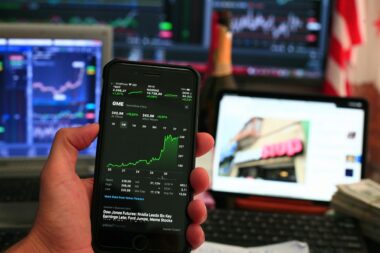

The Influence of Trade News on Global Stock Indices
Trade news plays a critical role in shaping the dynamics of global stock indices. Investors closely monitor economic indicators, policy announcements, and trade agreements to gauge their potential impacts on the financial markets. News items, particularly those that signal changes in trade relations or tariffs, can lead to significant market fluctuations. For instance, an unexpected announcement about a major trade agreement can send positive signals to investors, driving stock prices higher. Conversely, negative news, such as increased tariffs, may cause panic selling and lead to declines in indices. Understanding the nuances of how trade news influences stock prices is essential for investors looking to make informed decisions. The interconnected nature of global markets means that news from one country can have ramifications worldwide, affecting investor sentiment across borders. This complexity requires investors to stay updated on various trade developments, geopolitical tensions, and economic reports that can contribute to market volatility. Analysts often use news sentiment analysis tools to predict how specific announcements might influence investor behavior and stock performance.
The Immediate Reaction of Markets
Upon the release of trade-related news, stock markets tend to react swiftly, often leading to volatile intraday trading. Market participants utilize algorithms to analyze news instantly, resulting in significant price movements within minutes. For example, a strong employment report in a major economy may lead to an immediate uptick in related stock indices, while news indicating potential trade disputes could trigger a quick sell-off. Traders focused on high-frequency transactions capitalize on these immediate reactions to make quick profits. However, it’s important to note that initial reactions can sometimes be misleading. Markets may overreact to headlines, only to correct themselves as investors digest the implications of the news in the following days. Therefore, traders must exercise caution. In addition to the immediate market reaction, the long-term effects of trade news can shape investment strategies. Investors might adjust their portfolios based on perceived risks or opportunities resulting from trade developments. This nuanced understanding of immediate and extended impacts is critical for successful stock market engagement.
The interpretation of trade news is heavily influenced by market sentiment and broader economic contexts. For instance, a trade war might have different implications if the economy is booming compared to when it is in recession. Investors respond to trade news not only based on the actual content but also by weighing it against their expectations and current market conditions. If the news aligns with market sentiment, prices might stabilize quickly; however, if it contradicts the prevailing outlook, it could lead to prolonged volatility. Analysts often refer to the ‘surprise factor’ in trade news — how much the actual news deviates from market expectations plays a significant role in its impact. Additionally, the way this news is communicated through media outlets influences public perception and market response. Clarifying the situation through direct communication from government officials can mitigate fears, whereas ambiguous or conflicting reports can escalate uncertainty among investors. This interplay between actual news and its perception highlights the emotional aspect of stock trading, compelling investors to react impulsively or thoughtfully depending on various external factors.
The Role of Economic Indicators
Economic indicators serve as leading signals in understanding the potential impact of trade news on stock indices. Metrics such as GDP growth rates, inflation statistics, and unemployment figures can illuminate the health of an economy and provide context to trade discussions. For example, positive GDP growth may increase optimism surrounding trade negotiations, while high inflation might cast doubt on the sustainability of economic expansion amidst changing trade policies. Investors analyze these indicators in conjunction with trade news to form holistic investment strategies. Companies involved in international trade tend to see more significant fluctuations in their stock prices following relevant news. Hence, sectors like automotive, technology, and agriculture require keen scrutiny as they are often directly affected by trade policies. Moreover, economic indicators can lead to different narratives depending on the prevailing trade context, emphasizing the notion that one should not view these factors in isolation. Understanding this interconnected web of economic and trade news is essential for stock market participants hoping to navigate the complexities of investing effectively.
When assessing the influence of trade news on stock indices, it’s critical to consider the potential for market overreactions. Often, the initial response to bad news can be disproportionate to the actual impact on the economy or companies involved. Stock traders must balance their reactions with fundamental analysis to discern whether news will have lasting effects. A temporary drop or rise can create buying or selling opportunities for savvy investors willing to look beyond initial volatility. Additionally, understanding which sectors are most sensitive to trade news can help investors tailor their portfolios to either mitigate risk or capitalize on potential gains. For instance, technology stocks might react differently from industrials in response to trade tariffs depending on their reliance on foreign markets. Furthermore, news regarding globalization versus protectionism can offer insight into long-term trends affecting various sectors. This need for thoughtful analysis of trade-related developments is crucial in navigating stock market investments. Successful traders often highlight the benefit of patience—allowing the market to stabilize before making significant portfolio adjustments following news reports.
Global Responses to Trade Changes
Furthermore, the global interconnectedness of markets means that trade news will often have cross-border ramifications. For example, when a large economy imposes tariffs, countries that rely on trade with that economy will often react accordingly. These responses may manifest as currency fluctuations, impacting the stock market performance of affected nations. Investors should monitor not only domestic news but also international developments to anticipate how these shifts may create ripple effects. For example, trade tensions between the U.S. and China have historically impacted global stock market confidence. Events such as these can alter investor sentiment, leading to broad market responses that reflect apprehension or optimism about future economic relationships. Countries with strong export ties may see their stock indices respond more dramatically based on updates to trade agreements. Consequently, comprehensive analysis that takes into account foreign market responses to trade developments is essential for making informed investment decisions. Adapting to a complex web of international trade news allows investors to forecast potential risks while seizing opportunities presented by changing global dynamics.
Finally, navigating the effects of trade news on stock markets requires an understanding of shifts in investor behavior. As uncertainty mounts, investors often tend to pivot towards safe-haven assets, such as gold or government bonds, rather than equities. This shift can lead to short-term declines in stock indices as investors seek refuge from volatility. Alternatively, in times of positive trade news, there can be a rush to invest in equities, amplified by positive sentiment. This behavior illustrates that investor psychology plays a significant part in determining stock market movements in response to trade news. Behavioral finance explores how these emotional responses can lead to irrational trading decisions, amplifying market distortions. Investors should recognize these patterns to help strategize their investment approaches — such as knowing when to build positions in stocks or when to hedge against potential downturns. Additionally, utilizing techniques like sticking to a diversified investment approach can mitigate risks associated with market swings influenced by trade news. Ultimately, understanding investor behavior allows for more effective positioning within ever-changing market conditions, thus optimizing returns.
In summary, trade news significantly impacts global stock indices. Factors such as immediate market reactions, the influence of economic indicators, and investor sentiment all contribute to shaping how indices respond to these announcements. Knowing how to interpret news effectively and understanding its implications on a broader scale is essential for making informed trading decisions. Traders and investors equipped with this knowledge are more likely to navigate the often volatile environment that results from changing trade dynamics. The future of stock market engagement will continue to rely on how swiftly and accurately investors can react to emerging trade news. By utilizing sound analysis techniques and remaining alert to both domestic and global developments, investors can position themselves to take advantage of market fluctuations induced by trade news. As we observe market trends influenced by evolving trade relationships, staying informed will remain a crucial component of successful stock market strategy. Thus, blending timely information with analytical skills lays the groundwork for effective investment practices in an increasingly interconnected world.