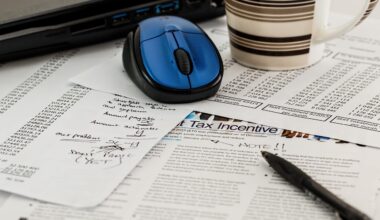

Keeping Accurate Tax Records During Economic Downturns
Maintaining accurate tax records is crucial, particularly during economic downturns. In trying times, financial stress can lead to hasty decisions regarding paperwork and documentation. Staying organized is essential for both individual taxpayers and businesses. Proper record-keeping helps ensure that you can take advantage of potential deductions and tax credits. In essence, accurate records smoothen an often complicated tax preparation process. To aid in gathering necessary information, consider creating a systematic filing system. Digital tools are particularly helpful, allowing you to store important documents securely. Scanning receipts and saving them in organized folders can save time, and money, and will streamline the preparation for filing taxes. Utilize spreadsheets to track income and expenses: categorize these elements to avoid confusion later. Proactive tax planning mitigates risks associated with audits or discrepancies. Furthermore, having all relevant documents organized means less stress when filing deadlines approach. Lastly, enlisting the help of a tax professional can provide additional insight into maintaining comprehensive tax records. With diligence, you can overcome challenges while ensuring you’re prepared when tax season arrives.
The Importance of Detailed Documentation
In challenging economic climates, documenting financial transactions accurately becomes even more vital. Descriptive records provide a robust defense against the inevitable scrutiny that accompanies audits. Proper documentation entails more than just keeping receipts; it involves maintaining complete financial records. This means tracking sales, expenses, and relevant tax filings in an organized manner. Make use of high-quality accounting software or tools designed for efficient data management. These systems help streamline data entry and keep everything in one place. When necessary, attempt to categorize each transaction to give thorough insights into spending habits. Additionally, always ensure that tax records are up-to-date and accessible. This habit not only simplifies year-end tax preparation but also enhances long-term financial planning. When faced with financial hardship, having precise records enables the business to assess its condition clearly, identifying areas that can be optimized. In some cases, it could reveal unexpected deductions or credits that might go unnoticed otherwise. Never underestimate the impact of a well-organized record-keeping strategy during economic uncertainty, as it fosters resilience and adaptability in your financial journey.
Furthermore, during economic downturns, scrutinizing every expense is critical. Review regular expenditures and determine if they can be reduced or eliminated. This is particularly essential when cash flows become unpredictable. Maintaining separate personal and business accounts is a best practice that aids clarity when tracking expenses. When tax time approaches, confusion surrounding deductions can lead to missed opportunities. Accurate records allow you to maximize deductions by providing proof of your expenses. Examples include home office costs, travel expenses, or even business meals. Always document the reason behind any expenses. This will establish a clear link between your expenses and your responsibilities as a taxpayer. Earmarking funds for taxes can alleviate financial strain each quarter as due dates approach. By being disciplined, you can ensure that your tax liabilities are manageable and avoid last-minute scrambles. It can be beneficial to have at least a year’s worth of records easily accessible to reference should questions arise. When meticulously kept, these records become invaluable assets in navigating financial hardships and stress during economic downturns.
Utilizing Tax Software or Professional Services
In these difficult times, leveraging tax preparation software can greatly assist in maintaining proper records and filing on time. Tax software often comes equipped with features designed to optimize your financial data management. Additionally, they offer built-in suggestions for potential deductions that might otherwise go unclaimed. This can be especially beneficial for taxpayers overwhelmed by the complexities that come with tax regulations. Alternatively, consider retaining the services of a tax professional. Their expertise will facilitate your understanding of evolving tax laws while enhancing record-keeping strategies. Tax professionals can provide tailored advice specific to your particular financial situation. They can assist both individuals and businesses in decoding tax-related challenges during volatile economic times. Moreover, having an expert in your corner can be an invaluable resource when unexpected audits or inquiries arise, minimizing stress. Nonetheless, before making a choice, always research qualifications to ensure that your selected professional possesses the appropriate experience. The financial investment in reputable tax software or reputable professional services will likely yield substantial returns in terms of tax reduction, organization, and peace of mind.
Staying informed about possible tax law changes is essential for maintaining accuracy in your filing practices. Ensure that you understand legislative modifications that can affect your tax position. Substantial alterations might impact available deductions, credits, or essential filing requirements. Doing timely research, especially during times of economic instability, can help alleviate confusion when preparing taxes. Regularly visit relevant websites such as the IRS for updates, or subscribe to newsletters from reliable financial advisors. This proactive approach supports your organization and understanding of your tax obligations while reducing anxiety during tax time. Providing your accountant or tax preparation service with updated documents is critical, as they make assessments based on accurate, current data. Furthermore, paying attention to deadlines can prevent late fees or penalties, especially during economically challenging conditions. Calendar reminders for important dates can help keep you on track. Seek to map out deadlines well in advance to avoid overlooking essential filings. In doing so, you set yourself up for a more straightforward and streamlined tax process, even in the most trying economic situations, and ensure compliance.
Maintaining Records for Future Planning
Thoughtful tax record-keeping extends beyond mere compliance; it lays the groundwork for future financial decisions. A historical view of tax returns offers valuable insights into budgeting and forecasting. Utilize the trends from previous records to make informed decisions about future investments and expenditures. By reviewing past income patterns and deductions, you can create a realistic picture of what needs to be prepared for in upcoming tax seasons. Keep in mind that today’s economic challenges might influence your future tax strategy. Adapting your approach based on current records will help you optimize your tax planning. Furthermore, whether collecting data for estimates or auditing purposes, having past records readily accessible is beneficial. It fosters confidence in your financial decisions and allows you to manage risks effectively. Consistently updating your records also ensures accuracy should discrepancies arise later. Thus, encouraging a holistic view of your financial situation positions you favorably as you navigate economic downturns. Ultimately, the information gathered during this time can serve as a key driver for stabilization and growth moving forward in your financial journey.
Communication and collaboration with family members or partners regarding record-keeping can enhance accountability. In the realm of business, involving team members in maintaining accurate records creates a shared understanding of financial responsibilities. Disseminating knowledge about financial data management supports collective efforts as everyone understands where they stand. Regular family meetings or check-ins can help keep everyone on the same page and prioritize the importance of tax preparation. Furthermore, consider setting protocols that govern how financial transactions are recorded and managed. This will minimize misunderstandings and discrepancies. Make it a habit to review records together periodically, ensuring transparency and developing a proactive culture in financial management. Given the uncertainty of economic climates, fostering open discussions around tax responsibilities promotes teamwork and readiness. When economic challenges arise, you will be better prepared if everyone has a vested interest in ensuring accurate documentation. Less stress translates to more effective responses to financial conditions. Ultimately, building strong communication channels each tax year enhances cooperation while fostering clarity in your financial endeavors.
Conclusion
In conclusion, accurate tax record-keeping during economic downturns is paramount. The importance of organized documentation cannot be overstated, as it has lasting implications for personal and business finances. Diligent routines foster better financial management practices that can withstand financial upheaval. Tools and resources, including software or professional assistance, are easily accessible to ensure efficiency in your tax preparation endeavors. Understanding tax changes prepares you for future scenarios that directly impact your finances. As financial circumstances fluctuate, the practices initiated today will greatly serve your interests going forward. Collaboration and communication are key to enhancing records, cementing family or business accountability. Maintaining clarity helps alleviate the pressures faced during tax season, ensuring that everyone stays on top of their records. Foster a culture of preparedness—after all, tax season is one of the few certainties in life. Avoiding pitfalls or common mistakes can allow you to optimize your returns effectively. Through these combined measures, both individuals and organizations can navigate uncertain times with assurance and strategy to create resilient financial futures.