
Volatility Clustering: Causes and Consequences in Financial Markets
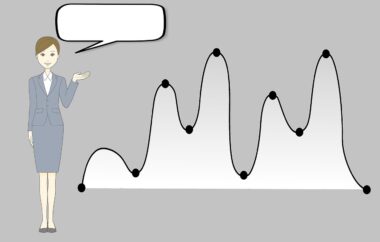
Volatility clustering is a phenomenon observed in financial markets where periods of high volatility tend to be followed by high volatility, and periods of low volatility are followed by low volatility. This characteristic raises essential questions about market behavior and trading strategies. Understanding the causes behind volatility clustering is crucial for investors, traders, and policymakers. Some theorists attribute this clustering to the market’s reaction to information, where bad news leads to greater uncertainty and price swings. Moreover, psychological factors play a significant role; traders’ perceptions can influence market dynamics. Risk-appetite shifts during turbulent times can exacerbate volatility, creating self-reinforcing cycles. As volatility feeds on itself, it can affect market liquidity and investor sentiment. Investors can benefit significantly from recognizing such patterns, as they provide insights into future price movements. Tools such as volatility indices and filters are pivotal in gauging market conditions. Hence, it is important for participants to monitor and analyze volatility patterns closely. Knowledge of volatility clustering not only aids in trading decisions but also in overall risk management strategies.
In addition to the economic factors influencing market volatility, events and external shocks can significantly contribute to volatility clustering. Examples of such shocks could include geopolitical tensions, economic policy changes, and natural disasters. These unforeseen events often lead to immediate market reactions, resulting in spikes in volatility. Investors may rush to hedge against potential risks, causing market prices to fluctuate wildly. The interconnectedness of global financial markets also means that volatility in one region can spill over into others. For example, instability in a country’s currency can affect its traded commodities and subsequently the financial markets worldwide. Historical data has shown that crises, like the 2008 financial crisis, bring about heightened volatility clustering. Understanding these external influences is essential for market participants as they can affect both short- and long-term trading strategies. Moreover, responding to these factors effectively requires agility in decision-making. As such, adaptive trading strategies may be required during these times of increased instability. Recognizing patterns of volatility before, during, and after significant market shifts can provide valuable insights for traders looking to navigate through crises.
Implications of Volatility Clustering for Risk Management
The implications of volatility clustering extend beyond mere observation; they are central to the risk management frameworks employed by institutions and individual investors alike. By acknowledging volatility patterns, financial professionals can develop more sophisticated risk assessment models. For instance, Value at Risk (VaR) calculations often need to incorporate high volatility periods more effectively to ensure they accurately predict possible losses during turbulent times. Additionally, the integration of volatility clustering into portfolio management is critical. Investors can optimize their asset allocations based on predicted volatility levels, thus enhancing return potential while attempting to mitigate risk exposure. Instruments like options and futures can be utilized strategically to hedge against potential downturns when volatility spikes are expected. Furthermore, sector-specific volatility can guide investors in diversifying their portfolios. By analyzing historical volatility data, investors can identify sectors that traditionally experience clustering and adjust their holdings accordingly. Therefore, an informed understanding of volatility clustering can not only protect capital but also leverage opportunities that arise from market fluctuations.
The presence of volatility clustering can influence trading strategies significantly, particularly among high-frequency and algorithmic trading firms. These entities thrive on short-term fluctuations, making it crucial to incorporate volatility measures into their trading algorithms. Recognizing the patterns associated with volatility clustering allows traders to better anticipate price jumps and adjust trade executions effectively. Techniques such as momentum trading often rely heavily on detecting these volatility swings, enabling traders to capitalize on upward or downward trends effectively. Furthermore, volatility forecasting tools play an essential role in adapting these strategies. By constantly assessing volatility levels, traders fine-tune their strategies to mitigate the impact of adverse price movements. Market microstructure also becomes important in this context; the speed and efficiency of order execution can determine overall profitability in volatile periods. Therefore, successful traders often formulate their strategies around observed volatility patterns to optimize profits. Techniques such as volatility breakout strategies can be employed, allowing traders to enter or exit positions based on perceived future movements in volatility. Applying these methods can yield substantial returns in a market characterized by persistent volatility clustering.
The Role of Investor Psychology in Volatility Clustering
Investor psychology plays a pivotal role in the phenomenon of volatility clustering. The emotional responses of market participants to changes in the economic landscape significantly affect their decision-making processes. During times of uncertainty, fear often takes over, prompting a sell-off that leads to increased volatility. Conversely, in more stable conditions, a sense of complacency may prevail, resulting in decreased trading activity. Behavioral finance examines these psychological factors to understand market dynamics better. Concepts like herd behavior highlight how individuals may gravitate towards the actions of the majority, further fueling volatility. Additionally, cognitive biases, such as confirmation bias, can lead investors to interpret information in a way that reinforces their existing beliefs, which can distort market perceptions. Recognizing these behavioral tendencies is essential for mitigating adverse effects on trading outcomes. A clear understanding of how psychological factors interact with volatility helps investors develop better strategies that factor in human behavior. Organizations often implement training and tools aimed at enhancing trading discipline, allowing investors to make more rational decisions even in volatile markets.
Moreover, volatility clustering can have significant economic implications beyond individual trades and investment strategies. Financial market stability is vital for economic growth and investor confidence. Persistent high volatility can lead to uncertainty in financial markets, discouraging both domestic and foreign investments. This uncertainty can hinder businesses’ willingness to engage in long-term projects, which may affect job creation and economic expansion. Central banks must consider market volatility when formulating monetary policies, as extreme volatility can prompt shifts in interest rates or liquidity measures. Policymakers should strive to stabilize financial markets to foster an environment of economic certainty. Volatility clustering may also heighten regulatory scrutiny as authorities assess systemic risks within the financial system. Understanding how these patterns manifest in response to broader economic conditions can guide policy decisions to safeguard investor interests. Thus, it is crucial for regulators to remain vigilant and responsive to emerging volatility trends. By maintaining oversight and fostering an understanding of volatility clustering, financial authorities can contribute significantly to market stability and long-term economic health.
Conclusion: Navigating Volatility in Financial Markets
In conclusion, volatility clustering is a critical concept that all financial market participants must grasp. It has profound implications for trading strategies, risk management, and overall market dynamics. Recognizing the patterns associated with volatility clustering allows traders and investors to navigate uncertainty more effectively. By understanding the causes of volatility and the significant impact of external shocks, participants can adapt their approaches to capitalize on potential opportunities. Behavioral aspects also highlight the importance of investor psychology in shaping market responses during volatile times. Hence, a comprehensive analysis of volatility can yield insights into constructing well-balanced portfolios and fine-tuning trading approaches. Monitoring volatility indices and historical data can empower investors to make informed trading decisions while mitigating risks. Consequently, adopting a proactive strategy allows for better positioning in the financial markets. As financial landscapes continue to evolve, especially in turbulent times, being equipped with knowledge about volatility clustering becomes an invaluable asset. Emphasizing educational resources and continuous analysis is crucial for enduring success amidst the pervasive nature of market volatility.