
The Role of Technical Analysis in Swing Trading Success
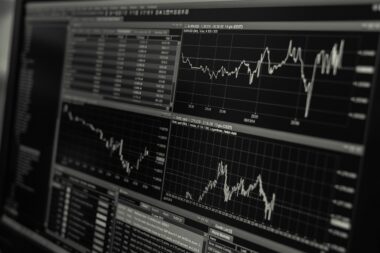
Swing trading is a strategy that benefits significantly from utilizing technical analysis for making timely trades. Technical analysis involves evaluating market data, usually through price charts and historical data, to forecast future price movements. Swing traders generally aim to capitalize on short to medium-term price trends, making analysis a crucial aspect. By identifying patterns and price levels, traders can make informed decisions about their entry and exit points. A trader can implement various indicators, such as moving averages and RSI, to gauge market sentiment and possible price trends. Additionally, using chart patterns like head and shoulders and triangles further enhances a trader’s skillset. Key support and resistance levels determined through technical analysis can assist traders in timing trades more effectively. By understanding market psychology, swing traders can anticipate potential reversals or continuations of trends, leading to more prosperous trades. Therefore, knowledge of technical analysis not only increases the chances of successful trades but also helps traders manage their risk better. It serves as a foundational tool for consistent analysis in swing trading.
Understanding Market Trends and Patterns
Identifying market trends is fundamental for achieving success in swing trading, and technical analysis provides the necessary tools to do this. The fundamental principle behind swing trading is to catch short-term movements in asset prices, usually lasting from a few days to a few weeks. Understanding whether a market is trending up, down, or sideways can greatly influence a trader’s decisions. Traders often rely on trend lines and chart patterns to visualize and define the prevailing trends. By clearly marking higher highs and higher lows in an uptrend, or lower highs and lower lows in a downtrend, a swing trader can recognize potential entry points when prices pull back. Additionally, recognizing consolidation periods and breakout patterns can help determine when to enter or exit a trade. It is also essential to consider volume accompanying price movements, as rising volume can indicate stronger momentum, increasing the reliability of a particular move. The integration of this understanding is vital for positioning trades effectively in favor of market momentum.
Moreover, technical indicators can enhance trading decisions, providing additional confirmation for trade setups. Tools like the moving averages help to smooth price data and provide clear signals when different timeframes intersect. For instance, a crossover of a short-term moving average over a long-term moving average is known as a bullish signal, while the opposite implies bearish conditions. The Relative Strength Index (RSI) can help to evaluate if an asset is overbought or oversold, indicating possible reversals. Utilizing these and other indicators in conjunction opens the window for more informed decision-making. However, it’s crucial to understand that no indicator is foolproof; they must be used as part of a comprehensive trading strategy. Swing traders should develop a well-rounded approach that amalgamates various technical tools tailored to their trading style. The effectiveness of technical analysis lies in its ability to help traders navigate price fluctuations while managing risk appropriately. Continuous practice with these indicators can lead to significant mastery over time, enhancing the chances of achieving consistent gains.
The Importance of Risk Management
Implementing sound risk management strategies is vital when employing technical analysis in swing trading. Risk management prevents substantial losses that can occur due to unforeseen market moves. A poor trade decision can lead to undesirable outcomes, demanding the need for well-defined trading rules. One popular approach involves setting stop-loss orders that trigger a sale when an asset falls to a predetermined price. This helps safeguard against more severe losses if a trade goes against the trader. Swing traders should establish a risk-reward ratio for each trade, ensuring that potential profits outweigh the risks. For instance, aiming for a ratio of 2:1 means that for every dollar risked, the opportunity for double that amount exists in profit. Furthermore, portfolio diversification mitigates overall risk exposure and creates a buffer against unpredictable market behavior. Traders should also periodically reassess their strategies and adjust risk management practices as necessary to remain aligned with changing market dynamics. Ultimately, a disciplined approach to risk management in line with technical analysis can foster long-term profitability.
Emotion plays a substantial role in trading success, and technical analysis can help minimize emotional decision-making. Traders often find themselves swayed by market noise or feelings of FOMO (fear of missing out), which can disrupt disciplined strategies. By relying on the objective nature of technical analysis, traders can sidestep emotional pitfalls. Charts and indicators provide concrete data and actionable signals, allowing traders to base decisions strictly on analysis rather than emotions. Implementing a trading plan grounded in technical analysis can reinforce a trader’s confidence and reduce stress. For instance, having predefined entry and exit points creates a checklist that traders can follow, mitigating the impact of hasty, emotional moves. Keeping a trading journal can also serve as a valuable tool for reflection, helping traders identify emotional triggers and improving overall discipline. The focus should always remain on strategy rather than market hype. This mindset reinforces the importance of technical analysis as a reliable guide, empowering traders to execute trades based on rational judgment, thus elevating their swing trading performance.
Continuous Learning and Adaptation
The financial markets are constantly evolving; hence, swing traders must embrace lifelong learning and adaptability. Technical analysis requires staying updated with new tools and methodologies to achieve better insights. Even seasoned traders can benefit from refining their skills, as trends and market behaviors change over time. Participating in webinars, workshops, and trading forums can provide valuable new perspectives. Additionally, studying historical market patterns deepens understanding, enabling traders to recognize repeated trends and cycles. Adapting to market advancements such as algorithmic trading and automated tools can streamline trading strategies and improve execution efficiency. Being open-minded to experimenting with new indicators, techniques, and platforms can reveal innovative ways to enhance technical analysis. Furthermore, joining trading communities offers opportunities for collaboration, knowledge exchange, and networking. Traders can also share experiences and strategies relevant to ongoing market conditions. Ultimately, the pursuit of continuous learning not only leads to improved proficiency but also enhances resilience to market challenges, encouraging sustained success in swing trading endeavors.
In conclusion, the integration of technical analysis is paramount to achieving success in swing trading. Traders must embrace market trends and patterns, effectively use technical indicators, and implement robust risk management practices. These tools collectively empower informed decision-making, contributing towards improved trading performance. Moreover, eliminating emotional decision-making via structured strategies fosters a disciplined approach crucial for long-term success. Continuous learning and adaptability are equally essential, ensuring that traders remain attuned to the dynamic nature of the financial markets. As such, technical analysis becomes not just a tool but a critical framework for navigating swings in price action. Leveraging comprehensive insights from technical analysis will significantly enhance the prospects of making profitable trades. By committing to a disciplined approach intertwined with technical analysis, traders can harness the probabilities in their favor and develop into proficient swing traders, leading to a consistent upward trajectory in trading results and economic growth.