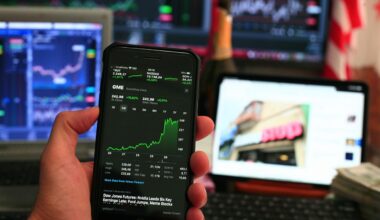

How Loss Aversion Affects Cryptocurrency Selling Decisions
The field of Behavioral Finance explores the impact of psychological influences on the financial decisions of individuals and institutions. In cryptocurrency trading, loss aversion appears prominently, driving traders to make certain decisions that might seem irrational from a purely financial standpoint. Loss aversion describes the tendency of investors to prefer avoiding losses rather than acquiring equivalent gains. This psychological phenomenon can lead to suboptimal trading strategies in the volatile cryptocurrency market, where emotions can run high. When faced with a potential loss, traders may hold onto their positions longer than rational analysis would suggest, hoping for a market turnaround. Consequently, this can result in greater losses compared to making a timely sell-off. In essence, the fear of realizing losses can trap individuals in a cycle of poor decision-making that goes against their best interests, which is particularly magnified in the fluctuating world of cryptocurrencies. By understanding how loss aversion functions, traders can become more aware of their emotions and make better-informed decisions, potentially improving their overall trading results in this challenging market.
Emotions play a crucial role in driving market behavior, particularly in the highly speculative cryptocurrency arena. Loss aversion makes individuals more sensitive to the thought of losing money than the prospect of gaining additional funds. This sensitivity can lead to a myriad of detrimental effects, such as anxiety and stress, which cloud judgment. The cryptocurrency landscape is unpredictable and often characterized by rapid price changes, compounding the feelings associated with loss aversion. Traders may experience heightened emotions when observing downward trends, which can intensify the urge to hold onto depreciating assets. This emotional turmoil can blind traders to the objective data available, leading them to ignore analytical tools and indicators that suggest a sell. Moreover, persistent holding can lead to financial ruin as capital is tied up in depreciating assets without any actionable strategy to recoup losses. To combat this, cryptocurrency traders must leverage emotional intelligence, developing mechanisms to manage feelings during trading sessions. Improved emotional management allows for a better understanding of market conditions and potentially enhances decision-making in the selling process.
Understanding the Dual Process of Decision Making
Within Behavioral Finance, dual-process theory highlights that decision-making comprises two systems: the intuitive and the deliberative. The intuitive system is fast and automatic, often influenced by emotions, such as fear and excitement. Conversely, the deliberative system engages slow, rational, and analytic thinking. In the context of cryptocurrency trading, when faced with a losing investment, the intuitive system usually prevails, compelling traders to hold and wait for a market reversal. This emotional reaction commonly disregards the factual basis for the decision at hand, fueled by the desire to avoid losses. Supporters of dual-process theory argue that the sway of the intuitive system can profoundly impact traders’ behavior. To counteract the influence of loss aversion, traders should consciously switch to the deliberative system during critical moments. This can involve pausing to analyze market conditions, assessing price trends, and evaluating whether holding through a loss is genuinely prudent. The ability to effectively engage rational thinking processes can lead to improved trading outcomes and reduce the emotional burden associated with potential losses.
Research into loss aversion and its effects on trading behavior has revealed several important insights for cryptocurrency traders. First, it has been established that loss aversion tends to lead to holding onto losing investments significantly longer than is advisable. This becomes especially important in cryptocurrency, where market fluctuations can create opportunities for quick gains or significant losses. Additionally, traders falling victim to loss aversion often develop a distorted perception of risk, making them likely to overestimate the chances of recovery and underestimate the potential for further decline. Consequently, they may linger in unprofitable positions rather than executing trades that could minimize losses effectively. This reaction invites avoidable financial harm and operational inefficiencies, making it detrimental in a fast-paced trading environment. Furthermore, traders should be acutely aware of their tendency towards loss aversion, integrating self-reflection and cognitive behavioral techniques to mitigate its negative effects. By establishing risk management strategies and setting predefined exit points for each trade, traders can better navigate their emotions and make more structured, rational decisions. Thus, the adoption of these measures can improve trading performance and ease the anxiety associated with realizing losses.
The Role of Cognitive Dissonance in Decision Making
Cognitive dissonance refers to the mental discomfort experienced when holding two conflicting beliefs or engaging in behavior contrary to one’s beliefs. In cryptocurrency trading, traders often grapple with the conflict of wanting to maintain a positive outlook while facing losses. This dissonance becomes particularly pronounced when traders fail to sell at a loss, hoping instead for a price rebound that may never occur. The fear of admitting a poor investment decision can lead to an internal conflict and an attempt to rationalize poor choices instead of implementing effective exit strategies. For traders, recognizing cognitive dissonance can be pivotal in addressing problems related to loss aversion. By acknowledging their emotional conflicts, traders enhance their self-awareness and can adopt a more analytical stance toward their trading behavior. This recognition can empower them to reassess their strategies more effectively, recalibrating their approaches to capitalize on gains while minimizing losses. Moreover, cognitive awareness can ultimately liberate traders from negative emotional cycles that impair decision-making. Through deliberate strategies of reframing losses, traders can overcome the grip of loss aversion and move toward a more balanced view of trading.
Numerous strategies can aid cryptocurrency traders in overcoming the detrimental effects of loss aversion on their selling decisions. One commonly recommended method involves setting stop-loss orders ahead of time. By defining a specific exit point for each trade, traders can mitigate emotional decision-making during market downturns and limit potential losses. This approach also introduces discipline into trading practices, encouraging traders to adhere to predetermined exit strategies rather than getting lost in emotional turmoil. Moreover, educating oneself about market trends, price patterns, and expert insights enhances one’s confidence, ultimately relieving pressure during loss scenarios. Implementing a thorough analysis of assets and building a diversified portfolio can also diminish the emotional impact associated with single investments. When alerts or notifications signal the need to evaluate a trade, it can serve as a reminder to replace impulse reactions with structured analysis. Lastly, support from trading communities can provide encouragement, fostering a collective understanding of emotional struggles faced in trading. Encouraging discussions with peers about experiences with loss aversion can normalize emotions and lead to helpful strategies, ultimately promoting a healthier trading environment.
Conclusion: Embracing Emotional Wisdom
In summary, loss aversion has a significant impact on cryptocurrency trading outcomes, shaping decisions that often diverge from optimal financial strategies. As markets fluctuate, emotions can cloud judgment, leading to delays in realizing losses and a false sense of security around unprofitable positions. By understanding the psychology behind their trading behavior, individuals can harness this awareness to develop structured approaches that minimize the effects of loss aversion. Emphasizing self-awareness, trading discipline, and community support can facilitate the emotional growth necessary for improved decision-making in high-stakes environments. Crucially, traders must recognize that experiencing losses is an inherent part of cryptocurrency trading and that re-framing losses can ultimately foster resilience and success in their trading journeys. Engaging in rational assessment, setting pre-defined exit strategies, and seeking help from trusted peers can create a balanced approach to navigate emotional landscapes. Through these mindful practices, traders enhance their ability to make reasoned, data-driven decisions despite the emotional challenges posed by loss aversion. As a result, embracing emotional wisdom becomes essential for thriving in the largely unpredictable world of cryptocurrency trading.