
Developing Quantitative Models for Currency Markets
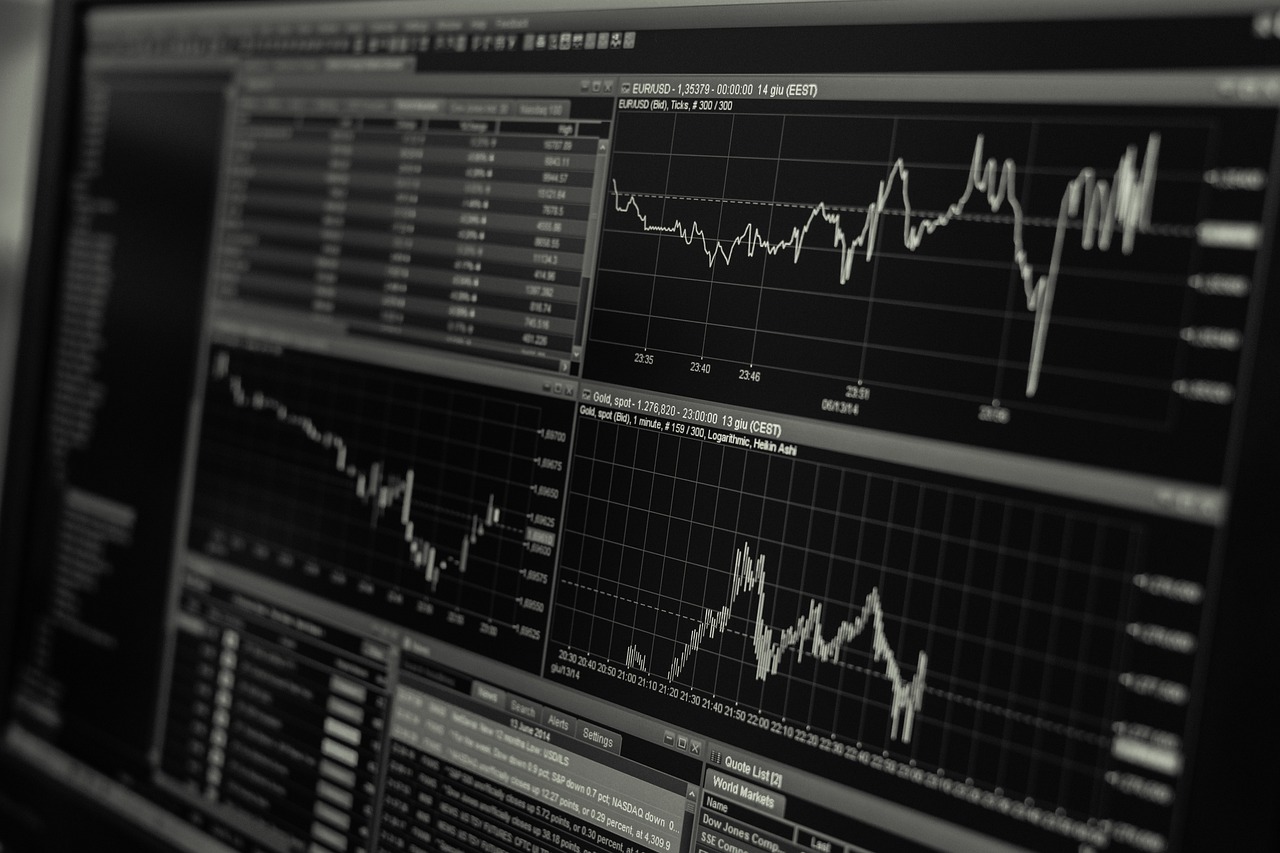
Quantitative models play a pivotal role in the analysis of currency markets, providing traders with invaluable insights into market movements. The complexity of currency fluctuations makes it essential to develop robust quantitative approaches that can adequately capture these dynamics. By applying statistical methods, quantitative analysts can identify patterns and correlations within historical data. Consequently, they can devise algorithms that assist in making informed trading decisions. Models such as the Arbitrage Pricing Theory or Vector Autoregression are commonly utilized in this field. However, it’s crucial to ensure these models are flexible and can adapt to changing market conditions. Furthermore, incorporating machine learning techniques can significantly enhance forecasting accuracy by analyzing vast datasets with tremendous efficiency. Additionally, the selection of appropriate features is paramount to the success of any quantitative model. Analysts often explore various macroeconomic indicators, such as interest rates, inflation rates, and political stability, to enhance their models. The careful calibration of these models allows traders to respond quickly to currency fluctuations while minimizing risks associated with foreign exchange trading. Thus, developing efficient quantitative models is fundamental for achieving a competitive edge in currency markets.
Effective risk management is another critical aspect of quantitative modeling in currency markets. Risk assessment techniques, such as Value at Risk (VaR) and Stress Testing, provide traders with insights into potential losses under various scenarios. By integrating these risk measures within their quantitative frameworks, traders can evaluate their exposure to different currency pairs and adjust their positions accordingly. Furthermore, the application of portfolio optimization algorithms can aid in determining the most efficient allocation of capital across multiple currencies. This process involves balancing risk and return objectives, thereby enhancing profitability while safeguarding against unforeseen market movements. Additionally, understanding the underlying motivations behind currency fluctuations is essential when developing quantitative models. Analysts often incorporate behavioral finance principles to capture market sentiment effectively. Sentiment analysis from news articles and social media can provide valuable inputs for predictive models. Moreover, aligning the quantitative approach with macroeconomic theory ensures that models remain relevant amid changing market conditions. Regularly backtesting models against real market data is also essential to assess their predictive power. By refining these quantitative strategies, traders can enhance their decision-making processes and improve overall performance in the currency markets.
Machine Learning in Currency Markets
The integration of machine learning techniques into quantitative models offers a transformative approach to currency market analysis. Machine learning enables the processing of large datasets, uncovering patterns and relationships that traditional methods may overlook. For instance, supervised learning algorithms can be trained on historical currency data to predict future price movements. Similarly, unsupervised approaches, such as clustering algorithms, can segment currencies based on behavior, helping analysts identify similar trading patterns. The adaptability of machine learning models allows them to evolve as new data emerges, providing traders with real-time insights into market trends. Furthermore, natural language processing (NLP) techniques can be employed to analyze sentiment from financial news and social media, allowing for a comprehensive understanding of market psychology. By leveraging machine learning, traders can enhance their predictive accuracy, informing their strategies and improving response times to market changes. However, it’s essential to maintain a cautious approach when implementing these advanced models, ensuring thorough validation and backtesting to mitigate overfitting risks. Hence, combining traditional quantitative methods with machine learning can yield powerful predictive models that better navigate the complexities of currency markets.
Coding skills play a fundamental role in developing effective quantitative models for currency markets. Proficiency in programming languages such as Python, R, or MATLAB is essential for implementing statistical functions and algorithms. These languages offer extensive libraries and frameworks that facilitate complex mathematical computations and data analysis. Furthermore, understanding data visualization tools is crucial for interpreting results clearly. Analysts can use libraries like Matplotlib or Seaborn in Python to create visual representations of their findings, enhancing insights. Additionally, familiarity with database management and querying languages such as SQL is beneficial for efficiently handling large datasets. This way, analysts can quickly access relevant information, enabling timely decision-making. Collaboration with other professionals in finance and technology sectors can also extend the development of these models. Sharing knowledge and skills fosters innovation and helps discover novel approaches to existing challenges in currency markets. Continuous learning and adaptation are vital, given that technology and market conditions change rapidly. Thus, investing time in improving coding skills and staying up-to-date with industry practices is indispensable for anyone aspiring to succeed in quantitative analysis within currency markets.
Challenges in Quantitative Currency Models
Despite the advantages of quantitative models, numerous challenges exist in currency market analysis. One significant hurdle is the inherent unpredictability of foreign exchange rates, influenced by geopolitical events, economic data releases, and central bank policies. These factors can introduce noise in historical data, potentially leading to inaccurate model predictions. Furthermore, the presence of high-frequency trading can create volatility that is difficult to capture within traditional quantitative frameworks. Market liquidity can also vary significantly, depending on different factors, such as time zones and trading volumes. Evaluating model performance becomes particularly challenging in such conditions, as the market behavior may shift dramatically. Additionally, overfitting remains a persistent concern, where a model may perform exceedingly well on historical data but poorly in real-time applications. Therefore, establishing robust validation and testing procedures is vital in addressing these challenges. Employing techniques such as cross-validation can assist in ensuring that models maintain reliability across various market scenarios. To mitigate these challenges, continuous monitoring and adaptation of models are necessary, enabling traders to respond proactively to changing market conditions.
Incorporating advanced analytics into currency market strategies provides traders with a competitive edge. Beyond basic quantitative models, the application of big data analytics enables the exploration of non-traditional data sources, such as social media and market sentiment indicators. By analyzing this information, traders can gain insights into public perception and expectations around specific currencies. Predictive analytics, driven by sophisticated algorithms and machine learning, allows for enhanced forecasting and risk assessment. Comparing current market conditions against historical trends, advanced analytics enables more accurate assessments of potential price movements. Moreover, employing techniques like scenario analysis equips traders with the ability to visualize the impact of different events on their trading strategies. This allows for better preparation and risk management in volatile markets. Increasingly, institutional investors are adopting these sophisticated analytical frameworks, recognizing their significance in informed decision-making. Consequently, further developing skills in analytics and machine learning is essential for today’s quantitative analysts. By embracing these advancements, traders increase their capacity to navigate the complexities of currency markets successfully.
Future Trends in Quantitative Currency Analysis
The future of quantitative analysis in currency markets is poised for notable advancements, driven by technological innovations and evolving market dynamics. One prominent trend is the growing reliance on artificial intelligence (AI) for predictive modeling. As AI algorithms continue to improve, they will provide even more accurate forecasts by learning from unfathomable amounts of market data. Additionally, data sources will expand, incorporating unconventional datasets such as weather patterns, geopolitical indicators, and real-time transaction data. This wealth of information will enhance model robustness, allowing analysts to better account for market anomalies. Furthermore, improved computational power will facilitate the application of more sophisticated algorithms, enabling complex model integrations. Automated trading strategies will likely gain traction as markets embrace speed and efficiency. Moreover, regulatory advancements and increased transparency in forex markets will influence model development, emphasizing the need for compliance mechanisms. The emphasis on ethical AI will also shape future quantitative analysis frameworks, ensuring that models are designed responsibly. Ultimately, the convergence of innovation in analytics, machine learning, and technology will redefine the landscape of quantitative currency analysis in profound ways.
The ongoing evolution of quantitative models in the currency market highlights the need for continuous development and adaptation of strategies. As market conditions evolve and the complexity of global finance increases, quantitative analysts must stay informed and agile. Building a culture of innovation within teams, fostering collaboration, and sharing knowledge will be critical for successfully harnessing new advancements. Additionally, leveraging cloud computing and decentralized finance can provide significant advantages for quantitative models, streamlining data access and enhancing computational capabilities. Efforts also need to focus on improving operational efficiency through streamlined processes and platforms that facilitate rapid backtesting and deployment of trading strategies. With an integrated approach combining technology, analytics, and traditional finance principles, analysts can cultivate a comprehensive understanding of currency markets. This holistic perspective is essential for crafting innovative quantitative models that thrive in ever-changing landscapes. Ultimately, keeping pace with industry developments will empower analysts to make informed decisions and seize opportunities that arise. Preparing for the future will require not just technical skills but a visionary mindset that encompasses adaptability, innovation, and ethical considerations in quantitative finance. This approach will shape the trajectory of currency market analysis in forthcoming years.